Look, I’ll be honest with you. For years, I had a little jar of fenugreek seeds sitting in my spice rack, and I barely touched it. I knew it was “healthy” because my grandma swore by it, but I didn’t really get the hype. Then last year, a friend who was struggling with her blood sugar asked me if I knew anything about it, and I went down a rabbit hole I didn’t expect.
Turns out, this little seed (and its leaves) is kind of a big deal. And not in that overhyped wellness influencer way. I’m talking real, science-backed benefits that have been used for centuries . So let’s sit down and talk about fenugreek—what it actually does, how to use it without making your kitchen smell like maple syrup (unless you’re into that), and what the research really says.
What Even Is Fenugreek?
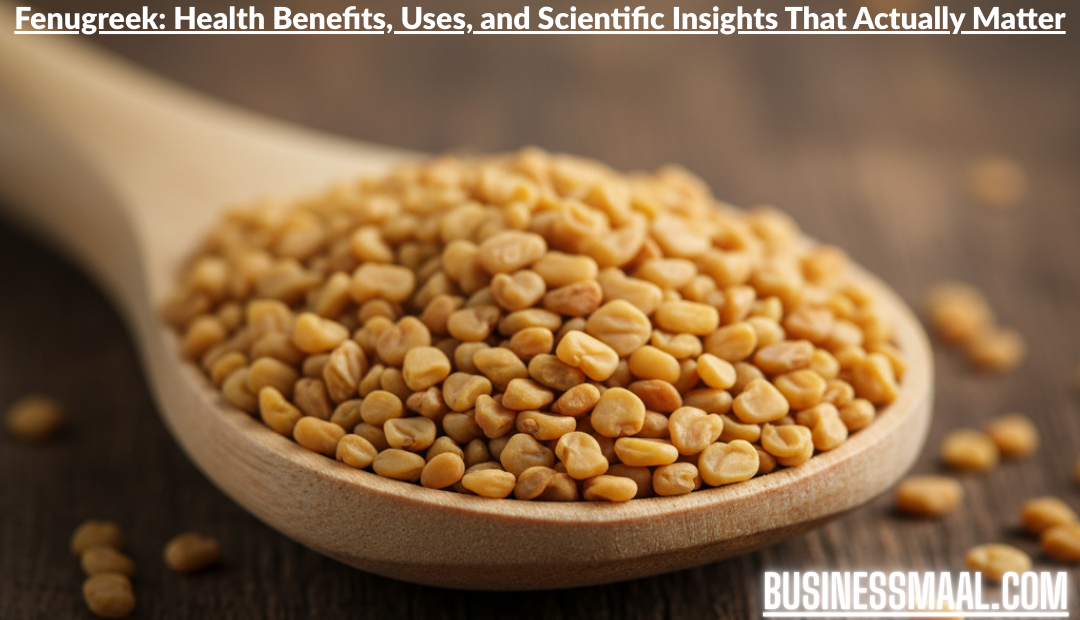
If you’re scratching your head, fenugreek—or Trigonella foenum-graecum if you wanna get fancy—is an herb that’s been hanging out in Indian and Mediterranean kitchens forever . The seeds are这些小黄金色的, kinda rhomboid-shaped nuggets that taste slightly bitter and nutty. And the leaves? You might know them as methi if you’ve ever ordered a delicious methi chicken or paratha at your favorite Indian spot .
Here’s what got me: both the seeds AND the leaves are packed with good stuff. We’re talking fiber, protein, iron, calcium, and these compounds with names like saponins and flavonoids that scientists get really excited about .
Quick heads-up: Fenugreek is in the legume family. So if peanuts or chickpeas give you trouble, you might wanna be careful here .
The Big One: Blood Sugar Support
Okay, so here’s where fenugreek really shines. And full disclosure—this is the reason I started paying attention.
The seeds are loaded with soluble fiber (specifically galactomannan) and an amino acid called 4-hydroxyisoleucine . What do these do? They basically slow down how fast your body absorbs sugar and carbs . Think of it like putting a speed bump on the highway of your digestion.
A bunch of studies—including some pretty solid reviews from 2024—show that fenugreek can help lower fasting blood sugar and even A1C levels when used alongside diet and exercise . One study on fenugreek sprouts found some genotypes showed almost 65% alpha-amylase inhibition, which is a fancy way of saying they stopped sugar absorption .
If you’re diabetic: Please talk to your doctor before going wild with fenugreek supplements. It can interact with meds and drop your blood sugar too low . Not a joke.
Breastfeeding and Maple Syrup Babies
This one’s personal. My sister-in-law struggled with low milk supply after her first, and her lactation consultant mentioned fenugreek. She tried it, and within a few days, she noticed a difference.
Turns out, fenugreek is one of the most studied herbs for boosting breast milk production . The research is a bit mixed—some studies show increased milk volume, others don’t—but traditional use backs it up big time .
The weird part: It can make your sweat and breast milk smell like maple syrup. No, really. There’s a compound in fenugreek that does this. It’s harmless, but it definitely surprises people .
Cholesterol and Heart Stuff
My dad has been dealing with high cholesterol for years, so I pay attention to anything that might help. Fenugreek’s soluble fiber doesn’t just help with blood sugar—it can also grab onto cholesterol and usher it out of your body before it causes trouble .
Some studies have found reductions in total cholesterol and LDL (the “bad” kind) with fenugreek seed products . Are the results consistent across every study? Nah. But enough positive signs that it’s worth keeping on your radar if heart health is a concern.
Digestion and Gut Health
Remember how I said fenugreek is sticky and fibrous? That’s the mucilage talking. It coats your digestive tract and can help with everything from constipation to inflammation .
In Ayurveda (where fenugreek is called methika), it’s been used for ages to kindle digestion—what they call agni—without aggravating other systems . A small amount before meals can help with bloating and gas. At least, that’s what I’ve noticed when I remember to soak some seeds overnight and chew them in the morning.
Pro tip: Always drink enough water with fenugreek. That fiber absorbs liquid, and without enough water, you might get the opposite effect you’re looking for .
Hair and Skin: The DIY Beauty Thing
Okay, confession time. A few months ago, I tried a fenugreek hair mask because I saw it on YouTube. Did it turn me into a hair model? No. But my scalp did feel nice, and my hair seemed softer.
Here’s the science-y part: fenugreek leaves have high saponin content, which gives them mild cleansing properties. Both leaves and seeds show anti-inflammatory effects and can strengthen hair follicles, potentially reducing hair fall .
People make pastes with soaked, ground seeds and slap it on their scalp or face. The anecdotal evidence is strong, but actual studies? Limited . Still, if you’re into natural beauty stuff, it’s worth a patch test. Just don’t expect miracles.
How to Actually Use Fenugreek (Without It Being Weird)
Let’s get practical. You don’t need to become a supplement junkie to get fenugreek into your life.
In the kitchen:
Sprinkle crushed seeds into your dal tadka or pickle mixes
Toss fresh methi leaves into parathas or omelets (game changer)
Make a simple tea by simmering crushed seeds with ginger
Try sprouted fenugreek seeds in salads for a crunchy, bitter kick
If you go the supplement route:
Start with small amounts. Your gut will thank you.
Look for reputable brands with third-party testing
Standardized extracts (500-600 mg daily) are common, but doses vary by need
For blood sugar, some studies use up to 5 grams of powdered seed daily
To cut the bitterness:
Dry roast the seeds lightly before using. Or soak them overnight. Makes a huge difference .
Wait, There Are Side Effects?
Yep. Nothing’s perfect.
Common stuff: gas, bloating, diarrhea if you overdo it. Dizziness sometimes. And that maple syrup smell I mentioned—it’s real and it’s spectacular .
Serious cautions:
Pregnancy: Skip high doses. Culinary amounts are probably fine, but supplements can stimulate uterine contractions .
Blood thinners: Fenugreek might affect clotting. If you’re on warfarin or aspirin, check with your doc .
Surgery: Stop supplements at least two weeks before if you’re having a procedure .
What Science Is Still Figuring Out
I love that fenugreek isn’t fully understood yet. Keeps things interesting.
Recent research is looking at:
Fenugreek sprouts and their enhanced antioxidant properties (germination seems to boost good stuff)
Potential anti-cancer effects in lab studies (very early, don’t get excited yet)
Anti-inflammatory benefits for conditions like arthritis
Cognitive health applications—some genotypes showed promising enzyme inhibition related to memory
The Bottom Line
Fenugreek isn’t a magic bullet. It’s not gonna fix your life or replace your medications. But it’s a solid, well-researched herb that’s been doing its thing for thousands of years .
I use it now. Not every day, but often enough that the jar doesn’t collect dust anymore. A little in my cooking, sometimes a tea when my digestion feels off, and yeah—occasionally that hair mask when I’m feeling fancy.
If you’re curious, start with food amounts. See how your body reacts. And if you’re dealing with something specific—blood sugar, milk supply, cholesterol—have an actual conversation with a healthcare provider who knows their stuff.
Your turn: Have you used fenugreek for something? Did your grandma swear by it for something I didn’t mention? Drop it in the comments—I genuinely want to hear.