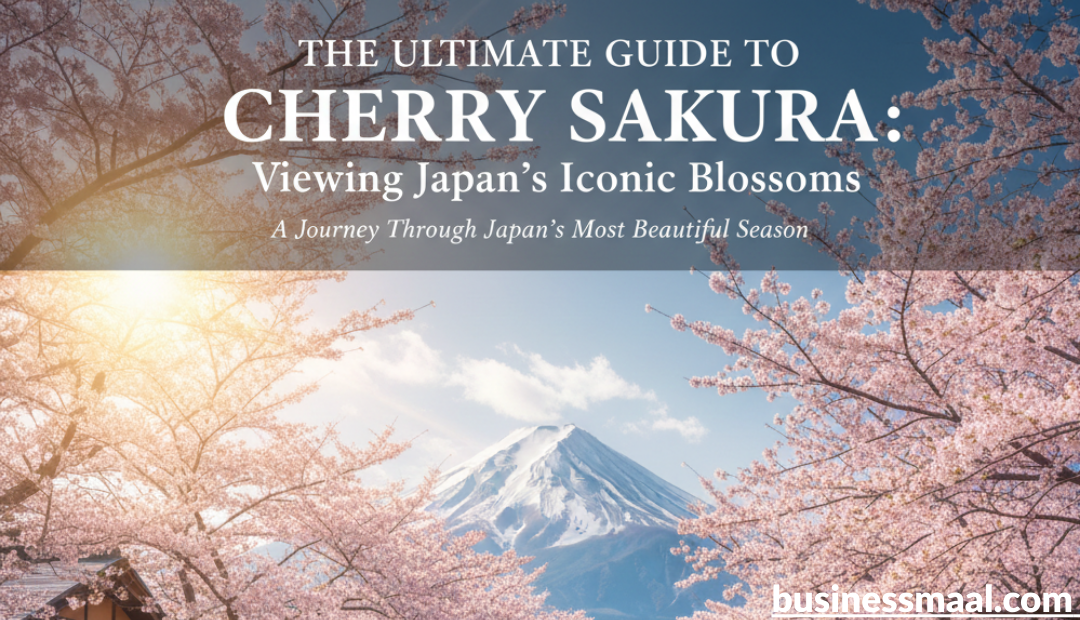
There’s a moment in spring that stops you in your tracks. You’re walking down a regular street, and then you see it—a cloud of pink so delicate and vibrant it doesn’t look real. I remember my first time seeing the cherry sakura in full bloom in Tokyo. I literally gasped. The air felt different, lighter. People were smiling, gathering under the trees, sharing food and laughter. It wasn’t just a flower; it was a feeling.
If you’ve been dreaming of witnessing this magic yourself but feel overwhelmed by the planning—when to go, where to go, what to actually do when you get there—you’re in the right place. Planning a trip around something as fleeting as the cherry blossom season can be tricky. But don’t worry, I’ve got you covered. This guide is packed with everything you need to know to experience the timeless beauty of Japan’s iconic blossoms, just like a local.
The Soul of Sakura: More Than Just a Pretty Flower
To really appreciate the cherry sakura, you have to understand what it means to the Japanese people. It’s so much more than a pretty tree. For centuries, the sakura has been a powerful symbol in Japanese culture, representing the beauty and fragility of life itself.
A Symbol of Renewal and Impermanence
Every year, the country watches the “sakura zensen” (cherry blossom front) as it moves from south to north. This isn’t just a weather report; it’s a national event. The bloom is a celebration of new beginnings—it’s the start of the school year and the fiscal year in Japan.
But there’s a deeper, more philosophical meaning. The fact that the blossoms are so beautiful and only last about a week or two is a reminder of “mono no aware,” a Japanese concept that translates roughly to “the bittersweet awareness of impermanence.” It teaches us to cherish the present moment because it won’t last forever. I love this idea. It makes you put down your phone and just soak it all in while you can.
The Tradition of Hanami
You can’t talk about cherry sakura without talking about “hanami,” which literally means “flower viewing.” This isn’t just a quiet walk in the park. It’s a full-blown social event! People stake out the best spots with blue tarps days in advance.
Daytime Hanami: Families and couples stroll under the trees, enjoying the sunshine and the delicate petals.
Nighttime Hanami (Yozakura): This is my personal favorite. Parks are lit up with paper lanterns, and the blossoms take on a magical, almost ghostly glow. The atmosphere is completely different—more romantic and contemplative.
When and Where to See Cherry Sakura
Okay, let’s get down to the practical stuff. You have a dream; let’s make it a reality. Timing is everything here. If you blink, you might miss it.
Predicting the Elusive Bloom
Predicting the cherry sakura bloom is an art and a science. Generally, the season starts in late March and can last until early May. It starts in the subtropical south (Okinawa) and moves north to Hokkaido.
Peak Season: The most popular time to visit is from late March to early April in major cities like Tokyo, Kyoto, and Osaka.
The Forecast: Keep a close eye on the official Japan Meteorological Corporation forecasts. They release updated predictions starting in January. Be flexible with your dates if you can!
Top 5 Viewing Spots (My Personal Picks)
You can see cherry sakura just about everywhere in Japan during spring, but some places are truly legendary.
Mount Yoshino, Nara Prefecture
For the ultimate experience, this is the place. It’s been Japan’s most famous cherry blossom spot for centuries. There are over 30,000 cherry trees covering the mountainside. When they all bloom, the entire mountain looks like a sea of pink clouds. It’s breathtaking.
Philosopher’s Path, Kyoto
This is a lovely two-kilometer stone path that follows a canal in northern Kyoto. It’s lined with hundreds of cherry trees. You can spend a whole afternoon here, stopping at tiny cafes and shops along the way. It’s a peaceful escape from the city crowds.
Shinjuku Gyoen, Tokyo
If you’re staying in Tokyo, this is my number one recommendation. It’s a huge park with wide lawns, so there’s plenty of space. They have over a thousand cherry trees of different varieties, which means the blooming season lasts a little longer here than elsewhere in the city.
Hirosaki Castle, Aomori Prefecture
If you’re traveling a bit later in the season, head north! Hirosaki Park is consistently rated one of the top three spots in Japan. The cherry trees frame the historic castle perfectly. The moat turns completely pink from the fallen petals—a sight you won’t forget.
Kenrokuen Garden, Kanazawa
Considered one of Japan’s three most beautiful landscape gardens, Kenrokuen is stunning in any season. But in spring, it’s next-level. The weeping cherry trees here are enormous and incredibly graceful.
The Art of the Perfect Hanami Party
Seeing the blossoms is one thing, but experiencing a hanami party is where the real magic happens. It can seem intimidating, but it’s actually really easy and fun.
What to Bring to Your Hanami
If you want to join the party, a little preparation goes a long way.
The Tarp: You need a “blue sheet” (blue tarp). It’s the unofficial uniform of hanami. You can buy them cheap at any convenience store (konbini) in Japan.
The Food: Hanami food is all about portability and sharing.
Hanami Dango: These are colorful rice dumplings on a skewer (pink, white, and green). A must-try.
Onigiri (Rice Balls): Easy to make or buy, and super satisfying.
Karaage (Fried Chicken): The cold, delicious fried chicken is a hanami staple.
The Drinks: You’ll see people drinking everything from sake and beer to canned cocktails and tea. Just remember to be respectful and don’t get too rowdy.
Hanami Etiquette: The Unspoken Rules
It’s a party, but it’s a polite party. Here are a few quick tips to fit right in:
Don’t be a tree hogger: Don’t set up your tarp right against a tree trunk. Leave space so everyone can enjoy the view.
Keep it clean: This is the golden rule. Bring a trash bag and take everything you brought back home with you. There are often few public trash cans, so you’ll need to be self-sufficient.
Be mindful of the branches: Never, ever pull on or shake the branches to make the petals fall. It damages the trees. Let nature do its thing.
Capturing Your Own Sakura Memories
Of course, you’ll want to take photos. But let me give you a piece of advice from someone who learned the hard way: don’t spend the whole time looking through your phone.
On my second trip, I made a conscious effort to put the camera down for an hour. I just sat on a bench, ate a dango, and watched the petals drift down. It’s the most peaceful memory I have. That said, you do want some great shots for the album!
Golden Hour: The best light is early morning or late afternoon. The light is softer and makes the pink petals glow.
Look for Details: Don’t just shoot wide shots of the trees. Get close-ups of a single cluster of blossoms. Frame a shot with a temple roof in the background.
Include People: Some of my favorite photos are of my friends laughing under the trees. It captures the spirit of hanami perfectly.
Conclusion: Don’t Just See It, Feel It
Experiencing the cherry sakura in Japan is more than just a vacation; it’s a rite of passage. It’s a chance to slow down, connect with nature, and participate in a beautiful, centuries-old tradition. Whether you’re sitting under a tree in a bustling Tokyo park or walking a quiet path in Kyoto, the feeling of those delicate pink petals floating down around you is something that stays with you forever.
So, start planning, book that flight, and get ready for an unforgettable adventure. Have you been to see the cherry blossoms, or is it on your bucket list? I’d love to hear your thoughts or answer any questions in the comments below!