Hey there, candy lovers! 🍭
You know that feeling when you unwrap a bright, shiny lollitip and pop it into your mouth? For me, it’s an instant ticket back to childhood—summer days at the county fair, birthday parties with goody bags, and those brave trips to the dentist that ended with a sweet reward.
But here’s something I never thought about until recently: where did these delightful treats on a stick actually come from? I always assumed someone just woke up one day and decided to stick candy on a handle. Boy, was I wrong!
The story of the lollitip is way older—and way weirder—than you’d ever imagine. We’re talking cave people, ancient royalty, and a racehorse that changed candy history forever. Grab something sweet, and let’s take a tasty trip through time.
What Exactly Is a Lollitip?
Before we dive in, let’s get on the same page. A lollitip (or lollipop—both work!) is basically candy on a stick. Simple, right? But that simplicity is exactly what makes it genius. You get to enjoy something sweet without sticky fingers, and it lasts way longer than a piece of chocolate you’d inhale in seconds .
Today, lollitips come in every color of the rainbow, hundreds of flavors, and shapes you wouldn’t believe. But they all share that same basic idea: sweet stuff + stick = pure happiness.
Ancient Beginnings: The Very First “Lollitips”
Cave People and Honey Sticks
Okay, picture this: thousands of years ago, some hungry cave person found a beehive. They grabbed a stick, dipped it in honey, and licked it clean rather than waste a single drop. Congratulations—you’ve just witnessed the world’s first lollitip!
I love imagining that moment. Some prehistoric foodie accidentally invented one of humanity’s most beloved treats. No fancy equipment, no food scientists—just hunger and a little creativity.
Ancient Civilizations Get Creative
The idea caught on. Archaeologists have found evidence that ancient Egyptians, Chinese, and Arabs were making candied fruits and nuts—dipping them in honey (which works as a natural preservative) and sticking them on little sticks for easy eating .
In ancient China and Japan, something even cooler was happening. Candy makers started creating amezaiku—beautiful sugar sculptures shaped into animals and flowers, fixed on sticks as religious offerings . These weren’t just candy; they were edible art given to temple visitors.
Think about that next time you grab a lollitip from the grocery store checkout. You’re holding thousands of years of human history in your hand!
The Middle Ages: Sugar Gets Fancy
Fast forward to medieval Europe. Sugar was crazy expensive back then—basically a luxury for the rich and powerful. Nobles would enjoy hardened sugar candy molded onto sticks after big fancy dinners. It helped with digestion (or so they claimed) and showed off how wealthy they were .
Can you imagine being at a medieval feast and pulling out a sugar stick like it’s the latest iPhone? That’s exactly what was happening. Common folks could only dream of such sweetness.
The 17th Century: The Word “Lollipop” Is Born
Here’s where it gets really interesting. In Northern England, folks had a dialect word for tongue: “lolly.” And “pop” meant slap. Put them together, and “lolly pop” literally means “tongue slap” .
I don’t know about you, but I think that’s the greatest candy name origin ever. Every time I eat a lollitip now, I imagine my tongue getting a friendly little slap of sweetness.
Street vendors in London started selling soft candy treats and calling them “lolly pops.” The term showed up in print as early as 1784 . By the 1800s, writers like Charles Dickens were using it in their novels .
The Birth of the Modern Lollitip
George Smith and a Racehorse Named Lolly Pop
Now we get to the early 1900s, where things really take off. In 1908, a candy maker from New Haven, Connecticut named George Smith started making hard candies on sticks .
Here’s my favorite part: Smith named his creation after his favorite racehorse—Lolly Pop . He eventually trademarked the name in 1931 .
A racehorse! Can you imagine naming your candy after a horse today? It’s so random and perfect. I like to think that horse was just as sweet and beloved as the candy itself.
Machines Change Everything
Around the same time, technology was catching up with our sweet tooth. In 1908, the Racine Confectionery Machine Company in Wisconsin introduced a machine that could put hard candy on sticks at an astonishing rate—2,400 per hour!
The owners honestly believed they could make enough lollipops in one week to supply the whole country for a year . They underestimated how much we love sugar!
Then in 1912, a Russian immigrant named Samuel Born invented the “Born Sucker Machine” in San Francisco—a device that automatically inserted sticks into candy . The city was so impressed they gave him the keys to the city in 1916 .
The Penny Candy Era: Lollipops for Everyone
Thanks to these machines, lollipops could be sold for just a penny. This changed everything.
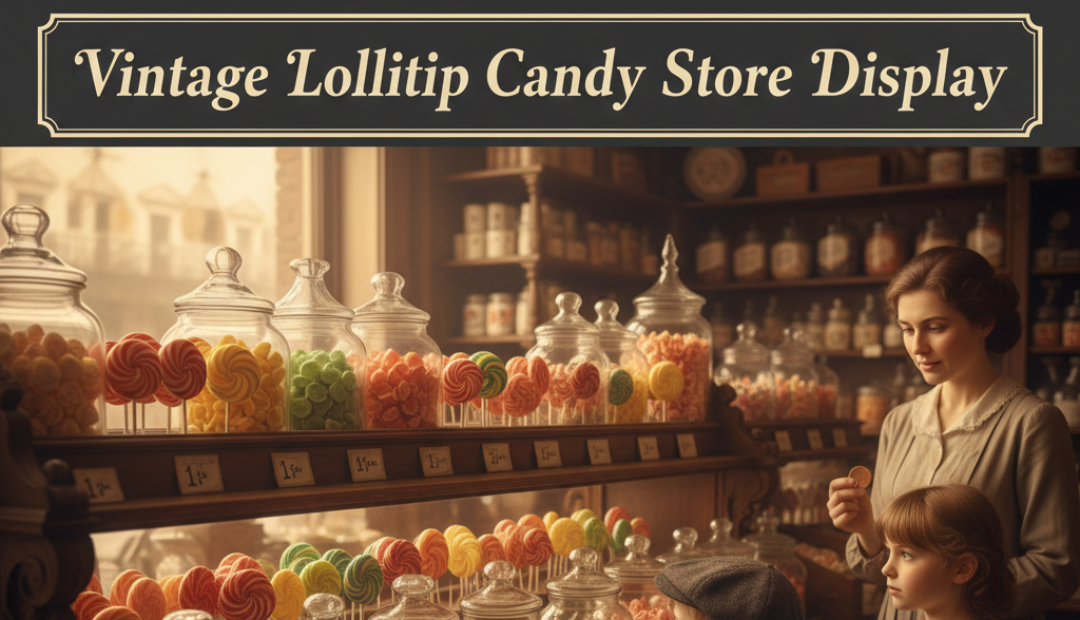
Suddenly, kids with a little spending money could walk into candy stores and pick their favorites from big glass jars. Lollipops became part of childhood culture .
Personal aside: My grandma used to tell me about the candy store near her childhood home—how she’d carefully choose which lollipop to spend her precious penny on. That simple choice probably felt like the biggest decision of her week. I love that kids today still get that same excitement.
Iconic Brands Arrive
The 1920s and 1930s gave us lollipop brands we still know and love:
Dum Dums launched in 1924 with seven original flavors . The name was chosen because it was easy for kids to say—like “Ma-Ma” and “Da-Da” .
Tootsie Pops arrived around 1931, combining a hard candy shell with a chewy Tootsie Roll center . That famous question—”How many licks does it take to get to the Tootsie Roll center?”—became advertising gold. (Spoiler: Purdue University engineers built a licking machine and found it takes about 364 licks .)
Lollipops Go Global
Spain’s Chupa Chups Revolution
In 1958, a Spanish candy maker named Enric Bernat noticed something: kids got sticky hands from candy. His solution? Put the candy on a stick so hands stay clean .
He called it Chupa Chups (from the Spanish verb “chupar,” meaning “to suck”). And here’s where it gets really cool—Bernat hired artist Salvador Dalí to design the logo in 1969 . Dalí sketched it on a newspaper in about an hour, and it’s basically unchanged today .
A famous surrealist designed a lollipop logo. That’s the kind of fun fact I love dropping at parties!
Regional Flavors Around the World
Different cultures made lollipops their own:
Mexico gave us spicy tamarind and chili lollipops
Japan kept the artistic tradition alive with intricate character-shaped pops
Europe experimented with floral and espresso flavors
The Middle East incorporated rose and other traditional flavors
The Modern Lollitip Revolution
Artisan Candy Renaissance
In the last 10-15 years, something wonderful has happened. People started caring more about where their food comes from and how it’s made. Candy followed suit .
Today, you can find handcrafted lollitips made with:
Real fruit purees instead of artificial flavors
Natural colors from plants
Unique flavor combos like lavender-honey or mango-chili
Stunning visual designs—galaxy swirls, embedded flowers, even custom photos
Sticky Singapore and Sparko Sweets in Los Angeles are part of this new wave—creating lollipops that are genuinely edible art . You can watch candy artisans handcraft each piece, folding and shaping molten sugar into something beautiful.
Healthier Options
Let’s be real—lollipops aren’t health food. But manufacturers have listened to folks who want better choices:
Sugar-free options using natural sweeteners
Vitamin-enhanced lollipops (some even have immune-supporting ingredients)
Vegan recipes without gelatin or animal products
Organic versions with cleaner ingredient lists
In 2023, Beekeeper’s Naturals launched throat-soothing lollipops with Vitamin D, zinc, and honey . In 2024, Chupa Chups introduced mini pops with Vitamin C and natural coloring .
Personalization and Celebration
Maybe the coolest modern trend? Custom lollipops for every occasion .
Weddings with personalized favor pops
Corporate events with branded logo lollipops
Birthday parties with custom names and messages
Holidays with themed designs
These aren’t just candy anymore—they’re edible expressions of thoughtfulness. Someone took the time to create something unique just for you.
Why We Still Love Lollitips
After thousands of years, what keeps us coming back?
I think it’s three things:
First, they slow us down. In a world of instant everything, a lollipop forces you to be patient. You can’t rush it. You just have to enjoy the moment .
Second, they’re universal. Age, language, culture—none of it matters. Everyone understands a lollipop .
Third, they hold memories. That first lollipop after a shot at the doctor’s. The giant swirl you got at the fair. The sucker your grandma always had in her purse. These aren’t just candies—they’re little time machines .
How to Enjoy Lollitips Today
Whether you’re a classic-candy fan or an adventurous foodie, here are some fun ways to enjoy lollitips:
Try Something New
Look for international flavors at specialty shops
Check out artisan brands online
Sample sugar-free or vitamin-added options
Get Creative
Use lollitips as cake toppers for instant party decor
Drop one into hot chocolate for a melting flavor stirrer
Crush them up for ice cream toppings
Add them to candy buffets at celebrations
Make Your Own
It’s surprisingly doable at home! You’ll need sugar, corn syrup, water, and flavoring. Heat the mixture to 300°F (the “hard crack” stage), add color and flavor, pour into molds, and insert sticks .
Fair warning: hot sugar is no joke. Be careful! But the payoff is worth it—homemade lollitips make amazing gifts.
The Future Is Sweet
So what’s next for lollitips?
I’m betting on even more sustainability—compostable wrappers, responsibly sourced ingredients, transparent supply chains . We’re already seeing companies move in this direction.
Functional ingredients will probably keep growing—think probiotics, adaptogens, maybe even CBD options in places where that’s legal .
And I hope the artisan movement keeps flourishing. There’s something magical about candy made by hand, with intention and care. It connects us to those ancient candy makers who first figured out that sugar + stick = happiness.
Let’s Keep the Conversation Going!
Whew—we’ve traveled from cave people licking honey sticks to Salvador Dalí designing logos to galaxy-swirl artisan pops. Who knew such a simple treat had such a wild story?
Now I want to hear from you! What’s your favorite lollipop memory? Are you team classic fruit flavors or do you love trying weird new combinations? Drop a comment below and let’s chat candy.
And if you enjoyed this sweet journey, share it with a friend who needs a little joy today. Better yet, go grab yourself a lollitip and enjoy every single lick. You’ve earned it!
Happy snacking, candy friends! 🍭