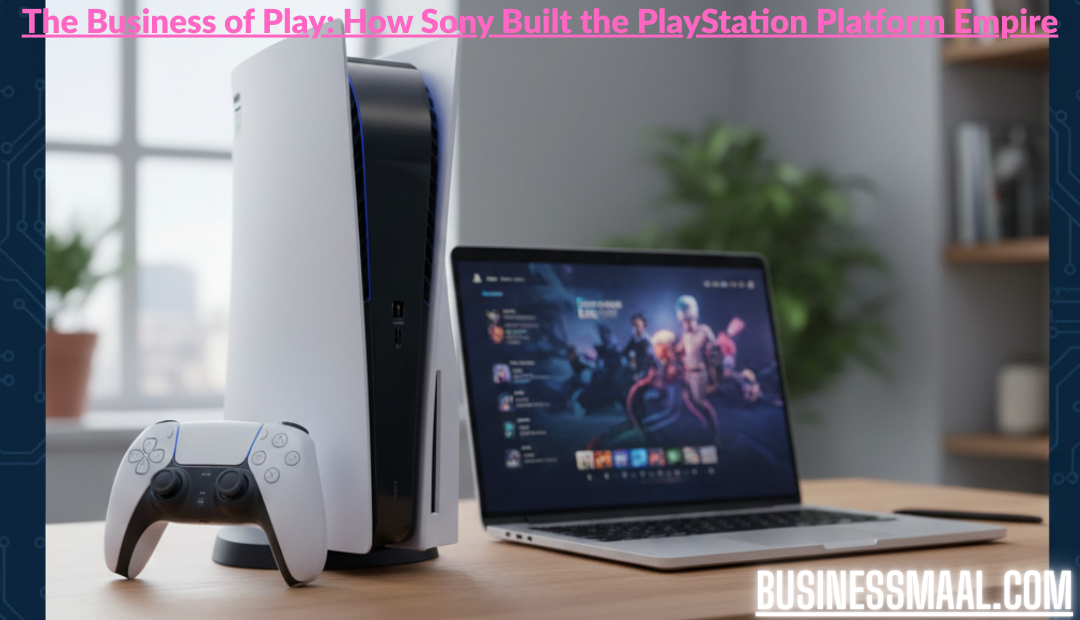
Have you ever looked at your game console and wondered what’s really going on behind the plastic? I mean, beyond the amazing graphics and the late-night gaming sessions? As a lifelong gamer who also happens to be a business nerd, I find myself doing this all the time.
We see the flashy ads and the exciting game reveals, but the real story—the Sony PlayStation platform business—is a fascinating mix of strategy, risk-taking, and incredible foresight. It’s easy to forget that this wasn’t always a sure thing. There was a time when Sony was the new kid on the block, challenging giants like Nintendo and Sega.
So, let’s pull back the curtain today. We’re going to explore how Sony transformed PlayStation from a daring side project into a multi-billion-dollar empire that defines modern gaming. Whether you’re an entrepreneur looking for business lessons or just a curious fan, there’s a lot to learn here.
The Early Days: A Gamble That Paid Off
To really understand this business, we have to go back to the early 90s. Believe it or not, the PlayStation was born out of a failed partnership with Nintendo. Sony had been working on a CD-ROM add-on for the Super Nintendo, but Nintendo abruptly backed out, leaving Sony with a prototype and a big problem.
Most companies would have just cut their losses and moved on. But Sony’s leadership, particularly Ken Kutaragi, saw an opportunity. They decided to go it alone. It was a massive gamble for a company known for televisions and music players, not toys.
But that outsider status gave them an edge. They didn’t have to follow the “toy company” rules. They targeted an older audience (the famous “PlayStation 1” slogan in Japan was “#1” – as in, the best), and they actively courted third-party developers who felt mistreated by Nintendo’s strict policies. This focus on the developer relationship became a cornerstone of their platform business model right from the start.
The Core of the Sony PlayStation Platform Business Model
So, how does the money actually work? It’s not just about selling shiny black boxes. The Sony PlayStation platform business is a classic two-sided market, and they have mastered the art of keeping both sides happy.
The Hardware: The Gateway
First, you have the hardware—the consoles themselves. Historically, Sony has sold these at a loss or at a very thin margin early in a console’s life. Why? Because the console is just the key to the kingdom. The goal is to get as many units into living rooms as possible. A larger install base means a bigger audience for the real moneymaker: the software.
The Software: The Real Cash Cow
This is where the magic happens. Every time a game is sold, Sony takes a licensing fee from the publisher. For physical games and digital downloads on the PlayStation Store, that cut is typically 30%. When you consider that a game like God of War: Ragnarok sells millions of copies at $70 each, that 30% adds up to an astronomical amount of revenue. It’s a high-margin, highly scalable business.
PlayStation Plus: The Subscription Goldmine
In recent years, Sony has added a third, incredibly lucrative layer: subscriptions. PlayStation Plus is no longer just for online play. With the revamped tiers (Essential, Extra, and Premium), it’s now a full-blown subscription service.
This is the dream for any business. A recurring monthly or yearly fee creates predictable, stable revenue. It keeps players locked into the ecosystem. If you’re paying for a year of PS Plus Premium, you’re much less likely to sell your console and switch to Xbox. It builds loyalty and smooths out the boom-and-bust cycles of big game releases.
First-Party Studios: Sony’s Secret Weapon
One of the smartest moves Sony ever made was investing heavily in its own internal development teams—the “PlayStation Studios.” You know them by their iconic brands: Naughty Dog (The Last of Us), Santa Monica Studio (God of War), Insomniac Games (Spider-Man), and Guerrilla Games (Horizon).
These studios serve a few critical business purposes:
System Sellers: A great exclusive game sells consoles. I know people who bought a PS4 just to play Bloodborne. I bought a PS5 just to play Demon’s Souls and Ratchet & Clank: Rift Apart. These titles are the “killer apps” that drive hardware adoption.
Showcasing the Tech: First-party games are built to push the hardware to its absolute limit. They show consumers and developers exactly what the console is capable of.
Profit Retention: When Sony sells a first-party game, they keep all the revenue (minus the platform fee, which they pay to themselves). It’s incredibly profitable.
My Take: What I admire most is their commitment to single-player, story-driven experiences. In an industry obsessed with “games as a service” and endless multiplayer live-service titles, Sony has doubled down on cinematic, narrative games. It’s a risky bet, but it’s one that resonates deeply with a massive audience of players like me who just want a great, immersive story.
The Digital Shift and the “Walled Garden”
The biggest change in the last decade has been the shift from physical discs to digital downloads. This has been a massive win for Sony’s bottom line.
Digital games cost less to distribute (no plastic, no shipping, no retailer cut). Plus, once you buy a digital game, you’re locked into the PlayStation ecosystem. You can’t resell it, and you can’t trade it in at GameStop. This is what business people call a “walled garden,” and Sony has built a very comfortable one.
PlayStation Store sales, like the massive Days of Play events, also drive huge revenue. They turn a $70 game into a $30 impulse buy, generating revenue on titles that might have otherwise been forgotten. It’s a brilliant way to monetize the back catalog.
Facing the Competition: The Console Wars
You can’t talk about the business without mentioning the competition. For decades, it was a two-horse race between Sony and Microsoft (with Nintendo doing its own wonderful thing in the corner).
Microsoft has changed its strategy in recent years, focusing heavily on Xbox Game Pass, a subscription service that gives you access to a huge library of games for a monthly fee. It’s a fantastic deal for consumers.
This has put pressure on Sony to respond. While they’ve doubled down on high-quality exclusives, they are also investing more in their own subscription tiers. The “console war” is no longer just about specs; it’s about ecosystems and subscription value. It’s a fascinating shift, and watching these two giants adapt is a masterclass in competitive strategy.
The Road Ahead: Cloud, PC, and Beyond
So, what’s next for this platform giant? Sony is clearly thinking about the future.
Cloud Gaming: With the tech inside the PS5 being so advanced, Sony is leveraging it for cloud streaming through PS Plus Premium. This allows you to play powerful games on devices that aren’t a console, like a PC or a smartphone.
PC Ports: For years, PlayStation games were strictly console-only. Now, we’re seeing hits like Horizon Zero Dawn and God of War come to PC. This opens up a massive new audience and generates huge additional revenue with relatively little extra work.
Expanding to Other Media: The success of The Last of Us HBO series shows that Sony is serious about turning its gaming IP into a multimedia empire. This isn’t just about selling games anymore; it’s about building entertainment franchises.
These moves show a company that understands it can’t rely on the traditional model forever. They are adapting and finding new ways to grow.
Key Lessons for Entrepreneurs
If you’re building a business, there’s a lot to learn from Sony’s playbook:
Dominate a Niche: Find your “first-party studios.” What can you create that no one else can? That unique value is what will make customers choose you.
Build a Recurring Revenue Model: Subscriptions are powerful. Think about how you can turn a one-time sale into an ongoing relationship.
Create a Platform: How can you bring different groups together (like gamers and developers) in a way that benefits both? The platform owner is the one who facilitates that value exchange.
Control the Ecosystem: Make it easy for customers to stay with you. The more friction there is to leave, the more loyal your customer base will be.
Conclusion
The Sony PlayStation platform business is a remarkable story of resilience, strategic thinking, and understanding what customers truly value. It started with a rejection and grew into one of the most successful entertainment businesses on the planet. They’ve mastered the art of balancing hardware innovation, compelling software, and sticky subscription services.
It’s a business model that will continue to evolve as technology changes, but the core idea remains the same: create a place where players love to spend their time and their money.
What’s your favorite PlayStation memory? Was it booting up the original PlayStation for the first time, or exploring the world of Horizon Forbidden West? Let me know in the comments below! And if you enjoyed this deep dive into the business side of gaming, feel free to share it with a friend.